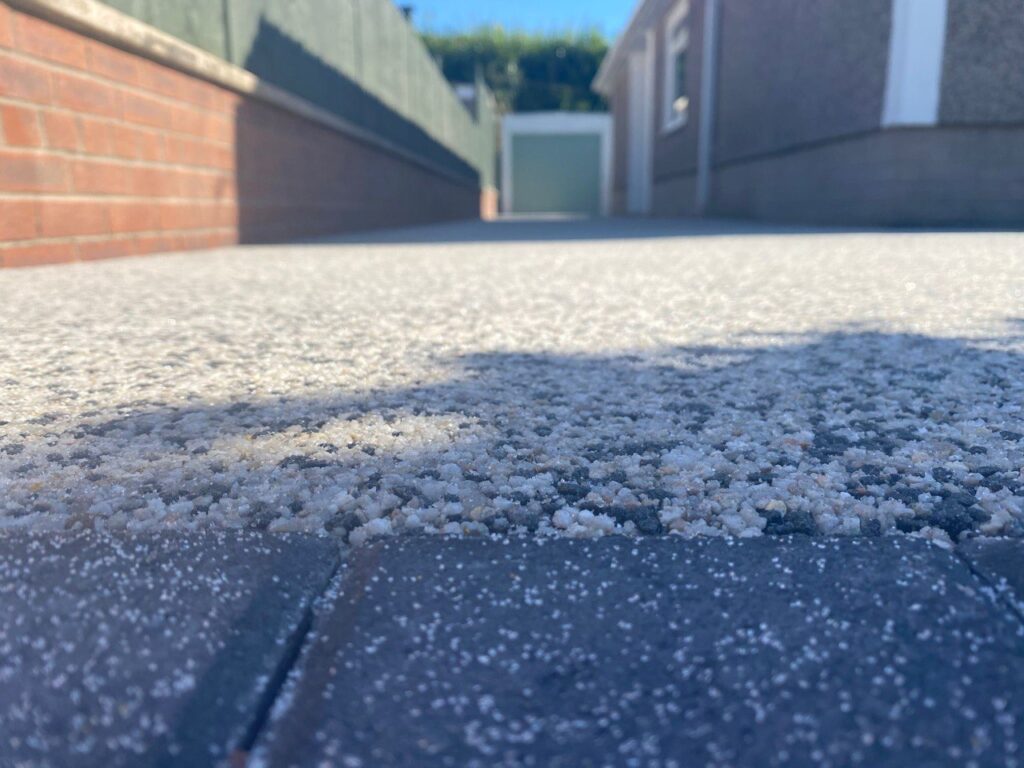
Tired of Patching the Same Drive? Find Out Whether Tarmac Resurfacing Is Suitable
Repeatedly patching a tarmac driveway can become frustrating, particularly when cracks and depressions continue to return in the same places. Although localised repairs are useful for isolated damage, they may not provide a lasting result when deterioration affects a larger proportion of the surface.
Tarmac resurfacing can renew a worn driveway without necessarily rebuilding it in full. However, its suitability depends on the stability of the existing base, the cause of the damage and the condition of features such as drainage and edging. A proper assessment is therefore essential before deciding how the driveway should be restored.
When Is Tarmac Resurfacing the Right Solution?
Resurfacing normally involves preparing the existing driveway and applying a new tarmac layer over a suitable base. It can produce a consistent, hard-wearing finish while retaining the sound parts of the original construction.
The method may be suitable when:
- The existing base remains firm and stable
- Damage is mainly confined to the surface
- Cracks are limited rather than deep and widespread
- There is no significant movement or subsidence
- The driveway maintains appropriate drainage falls
- Existing levels allow another surface layer to be added
- The surrounding kerbs and edges remain secure
These factors matter because the new surface will depend on the material beneath it. Resurfacing an unstable driveway may temporarily conceal the defects, but movement can eventually transfer through the new layer.
Why Do Patches Keep Failing?
A patch can repair a specific damaged area, but it does not always address the reason the damage developed. If the base beneath the driveway is weak, poorly compacted or affected by water, the repaired section may crack or sink again.
Recurring failure can also be caused by:
- Water collecting beneath or beside the driveway
- Weak joints between old and new materials
- Movement at unsupported edges
- Tree roots disturbing the construction
- Regular vehicle turning in the same position
- A surface that has deteriorated across several connected areas
- Previous repairs being applied over unresolved defects
When patches begin to cover a substantial part of the driveway, resurfacing may offer a more uniform solution. The underlying cause must still be identified before work begins.
Signs the Existing Base May Be Suitable
A driveway that remains broadly level and firm may be a good candidate for resurfacing. Surface fading, shallow wear, minor fretting and limited cracking can often be addressed through careful preparation and a new tarmac layer.
The existing driveway should not move under vehicle weight, and there should be no extensive depressions or pronounced changes in level. Any isolated defective sections may need to be removed and rebuilt before the wider surface is renewed.
When Resurfacing May Not Be Enough
Resurfacing is not designed to correct serious problems within the sub-base. If the driveway has widespread sinking, deep cracks, soft areas or repeated movement, more extensive reconstruction may be appropriate.
Warning signs include:
- Long cracks that reopen after repair
- Several sunken or raised sections
- Water repeatedly collecting in low areas
- Loose material across the full depth of the surface
- Edges that have collapsed or spread outwards
- Visible movement when vehicles pass over the driveway
- Damage affecting most of the driveway rather than isolated spots
Covering these defects without correcting them can allow the same problems to appear through the replacement surface.
Why Drainage Must Be Assessed
Water is a common contributor to tarmac deterioration. If rainwater cannot leave the driveway efficiently, it may collect on the surface, enter cracks or weaken the construction beneath.
Before resurfacing, the driveway’s falls, channels, outlets and adjoining ground levels should be examined. Existing drainage problems may need to be corrected as part of the preparation. This helps protect the new surface and reduces the likelihood of standing water contributing to further deterioration.
Existing Levels and Edges Matter
Adding a new layer changes the height of a driveway. There must be sufficient space around thresholds, drainage channels, inspection covers and other fixed features. The finished surface also needs to meet these elements neatly without creating low points or awkward transitions.
Strong edging is equally important. It supports the tarmac and helps prevent the sides from spreading under regular vehicle use. Loose or damaged edges should be corrected before the surface is laid.
What Proper Preparation Involves
Successful resurfacing depends heavily on preparation. The existing driveway should be cleaned so that loose material, dirt and vegetation do not interfere with the bond between layers.
Damaged sections may need to be cut out, weak areas strengthened and cracks treated. Levels and drainage should also be checked before an appropriate bonding treatment and the new tarmac layer are applied. Proper compaction then creates an even, durable finish.
Simply covering an unprepared driveway is unlikely to address recurring problems effectively.
Resurfacing Versus Continued Patching
Patching remains useful when damage is genuinely localised and the rest of the surface is in good condition. Resurfacing becomes more relevant when numerous repairs have left the driveway uneven or when deterioration has spread across a wider area.
The decision should be based on condition rather than appearance alone. A faded but structurally stable driveway may be suitable for resurfacing, while a driveway that looks reasonable could still require deeper work if its base is moving.
The Value of a Professional Driveway Assessment
A professional assessment can establish whether the damage is limited to the surface or extends into the driveway’s foundations. It also allows drainage, edging, levels and previous repairs to be considered together.
Canterbury Driveways & Surfacing assesses the complete driveway before recommending resurfacing or another suitable approach. This ensures that the proposed work responds to the actual cause of the deterioration rather than simply covering the visible signs.
Conclusion
Tarmac resurfacing can be an effective solution when repeated patches are no longer providing a consistent finish, provided the existing driveway has a stable base and suitable levels. It can address widespread surface wear, minor cracking and patchwork while retaining sound underlying construction.
However, resurfacing should not be used to conceal substantial movement, drainage failure or a weakened sub-base. If your tarmac driveway in Canterbury, Kent, continues to deteriorate despite previous repairs, contact Canterbury Driveways & Surfacing to arrange a professional assessment and determine the most appropriate way forward.
Call us on: 01227 203 897
Click here to find out more about Canterbury Driveways & Surfacing
Click here to complete our contact form and see how we can help with your driveway needs.