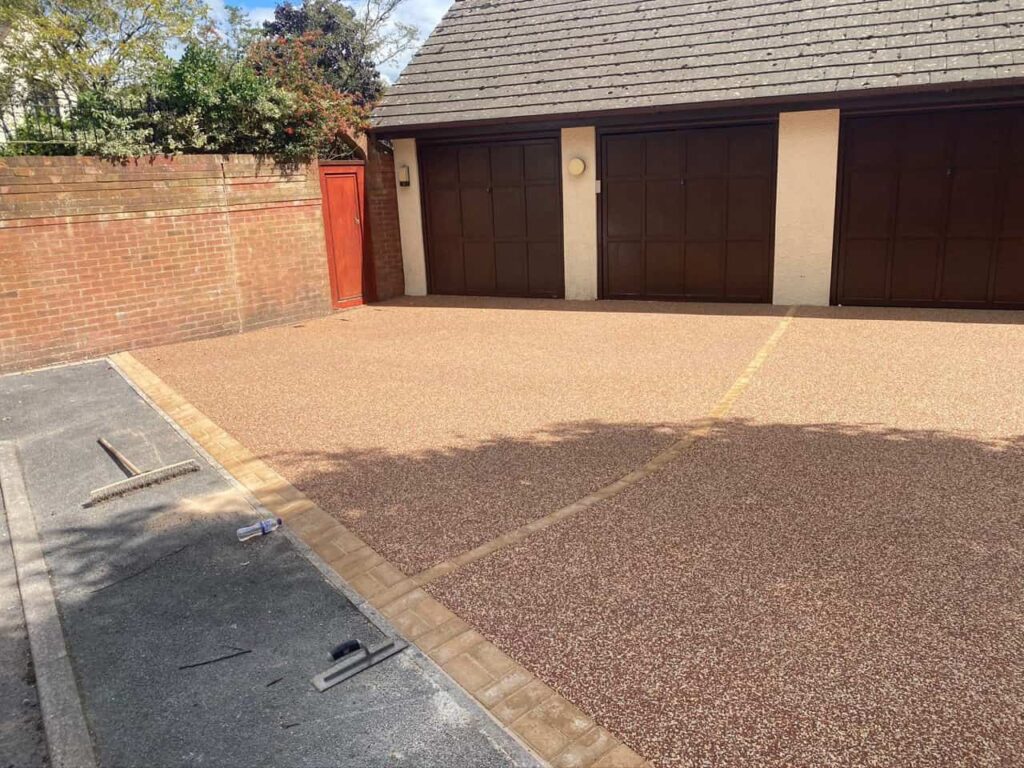
Why Is Tarmac a Strong Option for a Driveway Extension?
A driveway extension can provide additional parking, improve vehicle movement and make better use of the available frontage. However, the extended area must be constructed to the same standard as the existing driveway if it is to perform as one practical surface.
Tarmac is a strong option because it can cover areas of different shapes, create a smooth transition between sections and withstand regular vehicle use when installed over a suitable base. Its simple appearance also helps an enlarged driveway feel coordinated rather than visually divided.
For property owners in Canterbury, Kent, the quality of the preparation and the connection between the old and new sections will determine how well the completed driveway performs.
What Makes Tarmac Suitable for Extending a Driveway?
It Creates a Smooth, Continuous Finish
Tarmac is laid and compacted as a continuous surface. This makes it particularly useful where a driveway is being widened or extended into an adjoining area.
With careful preparation, the new section can meet the existing driveway without an awkward difference in level. Depending on the condition of the original surface, resurfacing a wider area may also help create a more uniform overall appearance.
It Can Accommodate Different Layouts
A driveway extension is not always a simple rectangular addition. It may need to follow a boundary, widen near the property or create a turning and parking area.
Tarmac can be shaped around curves, corners, paths and established features. This flexibility allows the design to use the available space efficiently while maintaining clear routes for vehicles and pedestrians.
It Is Suitable for Regular Vehicle Movement
An extended driveway may be used for parking, turning or passing vehicles. These repeated movements place pressure on the surface, particularly where wheels turn while vehicles are moving slowly.
A correctly constructed tarmac driveway distributes these loads through the surface and sub-base. The material performs most effectively when the depth and preparation reflect the ground conditions and intended use.
The Existing Driveway Can Be Assessed First
Before adding a new section, the original driveway should be inspected. Cracking, settlement, weak edges or drainage problems may indicate that local repairs or broader preparation are required.
Important questions include:
- Is the existing surface structurally sound?
- Are the current levels suitable?
- Does water drain effectively?
- Are there soft or sunken areas?
- Can the new section connect securely?
- Will existing edging need to be removed or repositioned?
This assessment helps determine whether the extension can be joined to the existing driveway or whether resurfacing should form part of the project.
Proper Ground Preparation Prevents Settlement
The strength of a driveway extension depends largely on what lies beneath the tarmac. The new area must be excavated to a suitable depth and built with a well-compacted sub-base.
If the extension is laid over weak soil, loose material or insufficient foundations, it may settle independently from the original driveway. This can create cracking, depressions or a visible step at the join.
Professional preparation gives the extended area the support needed to remain stable under vehicle loads.
The Connection Between Old and New Areas Matters
The point where the extension meets the existing driveway is a vulnerable part of the installation. Both sections need compatible levels, adequate support and a properly formed joint.
A poorly prepared join may allow movement or water penetration. The contractor should examine the edge of the original surface, remove any unsuitable material and create a sound transition before the new tarmac is laid.
Drainage Can Be Redesigned for the Larger Area
Extending a driveway increases the amount of surfaced ground and may change the direction in which rainwater flows. Existing drainage arrangements may no longer be suitable for the enlarged layout.
The design should consider:
- Falls across the new and existing surfaces
- Low points where water could collect
- Drainage channels or outlets
- Thresholds near the property
- Adjoining paths and planted areas
- The position of the new outer edges
Planning these details before construction helps prevent standing water and protects the surrounding area.
Secure Edging Supports the Extension
Tarmac needs firm edge support to retain its shape. When a driveway is widened, an existing edge may become part of the internal surface and a new perimeter must be created.
Well-constructed edging contains the tarmac, supports areas exposed to turning vehicles and gives the extension a clean outline. Contrasting kerbs or blocks can also provide subtle definition without making the layout appear overly detailed.
It Can Improve Parking and Access
An extension should be planned around how vehicles will actually use the space. Simply adding more surface does not always produce a practical layout.
Professional measurements can establish whether the design provides enough room for:
- Additional parking
- Opening vehicle doors
- Entering and leaving comfortably
- Accessing paths and entrances
- Moving bins or garden equipment
- Turning without driving over edges
This ensures that the completed extension delivers a meaningful improvement rather than only increasing the paved area.
The Appearance Can Be Kept Simple
Tarmac has a restrained finish that works well across larger driveway areas. An extension can therefore increase the usable surface without introducing numerous patterns or changes in material.
New tarmac may initially look darker than an older surface. Natural weathering can soften this contrast, although resurfacing the existing section may be considered where a more immediately uniform appearance is preferred and its condition allows.
Maintenance Remains Straightforward
A tarmac driveway should be kept clear of debris, and drainage points should remain unobstructed. Any cracks, depressions or edge damage should be investigated before they spread.
Because the extension and original driveway work as one surface, changes around their connection deserve particular attention. Prompt maintenance helps preserve the smooth transition between the two areas.
Why Professional Installation Matters
A successful tarmac driveway extension requires more than laying material over unused ground. Excavation, sub-base construction, levels, drainage, edging and the connection to the existing surface must all be coordinated.
Canterbury Driveways & Surfacing can assess the current driveway, plan the extended layout and complete the necessary groundwork for a stable finish. This gives property owners in Canterbury, Kent, a driveway extension designed around their access and parking needs.
Conclusion
Tarmac is a strong option for a driveway extension because it creates a smooth surface, adapts to different layouts and supports regular vehicle use. It can also provide a simple, coordinated appearance across an enlarged frontage.
Its performance depends on proper foundations, secure edging, effective drainage and a carefully prepared connection to the existing driveway. If you are considering a tarmac driveway extension in Canterbury, Kent, contact Canterbury Driveways & Surfacing to arrange a professional assessment.
Call us on: 01227 203 897
Click here to find out more about Canterbury Driveways & Surfacing
Click here to complete our contact form and see how we can help with your driveway needs.